After enquiries from members about the new cellphone policy and how that impacts NCEA Subjects that require large quantities of photographic evidence. Building, Hospitality, the new NCEA Achievement Standards, and more all require photographic evidence, and in previous years ākonga would use their own cellphones to take regular evidence.
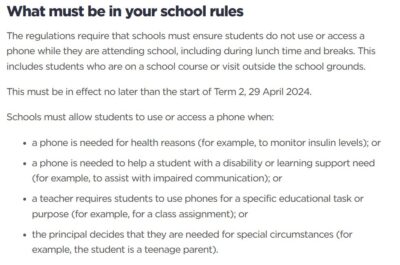
When looking on the Ministry of Education guidance there is (as of 1 February 2024) a list of what must be in the rules. This includes “a teacher requires students to use phones for a specific educational task or purpose (for example, for a class assignment)”. As the Ministry’s guidance is that this must be in the school rules, all kaiako should have the ability for ākonga to use their cellphones for this valid and necessary specific educational purpose.
https://www.education.govt.nz/school/digital-technology/cellphones
From the MoE Website
What must be in your school rules
The regulations require that schools must ensure students do not use or access a phone while they are attending school, including during lunch time and breaks. This includes students who are on a school course or visit outside the school grounds.
This must be in effect no later than the start of Term 2, 29 April 2024.
Schools must allow students to use or access a phone when:
- a phone is needed for health reasons (for example, to monitor insulin levels); or
- a phone is needed to help a student with a disability or learning support need (for example, to assist with impaired communication); or
- a teacher requires students to use phones for a specific educational task or purpose (for example, for a class assignment); or
- the principal decides that they are needed for special circumstances (for example, the student is a teenage parent).